
Archive Record
Images
Metadata
Title |
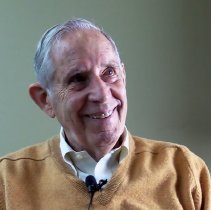
An Interview with George Gibbs |
Catalog Number |
2021.074.002 |
Object Name |
Recording, Video |
Scope & Content |
An Interview with George Sabin Gibbs III >>Oral history interview by James Wall, October 22, 2021, Louisville, KY. >>George Gibbs was a lifelong forester who began his career as a Junior Forester on the Croatan NF in New Bern, NC. After serving as an Army Intelligence officer for three years, he returned to the Forest Service where he started as an Assistant Ranger on the Wakulla Ranger District of the Apalachicola NF in Crawfordville, FL. He spent the next seven years there and ascended to the position of District Ranger. His major accomplishments during that tour of duty were the reduction of wildfires from approximately 37 per year to about seven per year. This resulted from an active prescribed burning program which reduced fuels in a checkerboard pattern and reducing the age of ruffs to less than five years. He also reduced the timber sale workload by aggressively enforcing sale inspections and management. During this time, George was responsible for setting aside two areas as "Scenic Areas". These ultimately became the Bradwell Bay Wilderness Area and Morrison Hammock Wilderness Area. In 1968, George moved to Asheville, North Carolina as assistant staff officer with responsibility for wildlife management and fire control. His duties included inventory of fire damages as well as suppression efforts. In order to reduce detection costs, George spent many hours in a small plane plotting courses over the National Forests as well as the Great Smokey Mountain National Park and Cherokee Indian Agency lands. Courses would vary according to fire danger and would reduce the manpower needed to detect potential wildfires. His wildlife duties included a review of timber management prescriptions to determine their effects on various wildlife populations and to make recommendations that would enhance or mitigate those decisions. This led him to the Snowbird Creek area in western North Carolina where he and a technician were assigned to study the timber management opportunities in that drainage. Camped out for a couple of weeks at the confluence of tributaries was a memorable experience for them. Fishing for native brook trout with "stickbait" and safety pins was an unusual and satisfying experience. George’s report recommended that the snowbird drainage be protected as a "Biological Management Area" to protect one of the few "native" brook trout streams in the area. This area was later selected for inclusion as the Snowbird Wilderness area. As hurricane Camille was invading the coastline of Mississippi in 1971, George was promoted to Staff Officer for Range and Wildlife Management in Jackson, Mississippi. Range management was a new field for George, requiring him to become more familiar with grasses, herbs, and forbes so that he could evaluate the carrying capacity of the forest to support grazing animals. Wild animals along with permitted grazing animals were now a part of the Timber management prescription review process and George became an almost full time member of the interdisciplinary team that reviewed timber plans for their effects on other resources. As a wildlife biologist, George was selected by the Regional Staff in Atlanta to represent the Region at NASA In Houston,Texas. The purpose of this assignment was to develop the habitat requirements for a variety of animal speciesthat could be determined from aerial surveillance – specifically from the new Earth Satellite about to be deployed in space. Using computers and satellite imagery, George and the team were able to interpret 17 variables into specific elements of habitat that could be measured and by inference measure the numbers of animals the forested habitat could carry. (This data has not been used since the study, though it was field tested for accuracy. It is believed that the coming long range planning process preempted the use of this data). In 1974, George was reassigned to become the Staff Officer for Land Use Planning in Montgomery, Alabama. His primary duty was to lead an interdisciplinary team of specialists in developing land use plans for the National Forests in Alabama, an area of some 640,000 acres on 5 separate National Forests. As team leader, he was also the Environmental Coordinator during a period of rapidly changing laws and regulations. The planning process was rapidly evolving as 187 National Forests across the U.S. developed their own procedures. As each perfected part of the process, the Regional Offices and the Washington Office gave their stamp of approval and the process became more unified. In October 1984, the first draft of the Alabama plan was completed and sent to about 3000 individuals and organizations for review and comment. George retired from the Forest Service after some 30 years of service in November of 1984. |
Additional File |
Click Here to View PDF. |
Year Range from |
2021 |
Year Range to |
2021 |
People |
Gibbs, George S. |
Subjects |
Croatan NF Apalachicola NF Atlanta Regional Office |
Search Terms |
Oral History Timber Management Timber Silviculture Surveying Wildlife Fire-Prescribed Fire-Control Range Management Planning |
Catalog date |
2022-08-23 |
Collection |
Oral History |